Public transport systems across Europe are undergoing a profound transformation. Cities are pushing toward digitalisation, multimodal mobility, and sustainability. Passengers expect seamless travel across different modes of transport, and regulators increasingly introduce policies that influence how ticketing systems must operate.
At the same time, many ticketing infrastructures were designed years ago – often under very different assumptions. This creates an interesting tension: new mobility expectations are being layered on top of existing systems that were never designed for such complexity.
During several ticketing implementations across Europe, I have observed a recurring pattern.The challenges rarely lie in the technology itself. More often, they arise from the context in which the technology has to operate.
Ticketing systems are more than software.
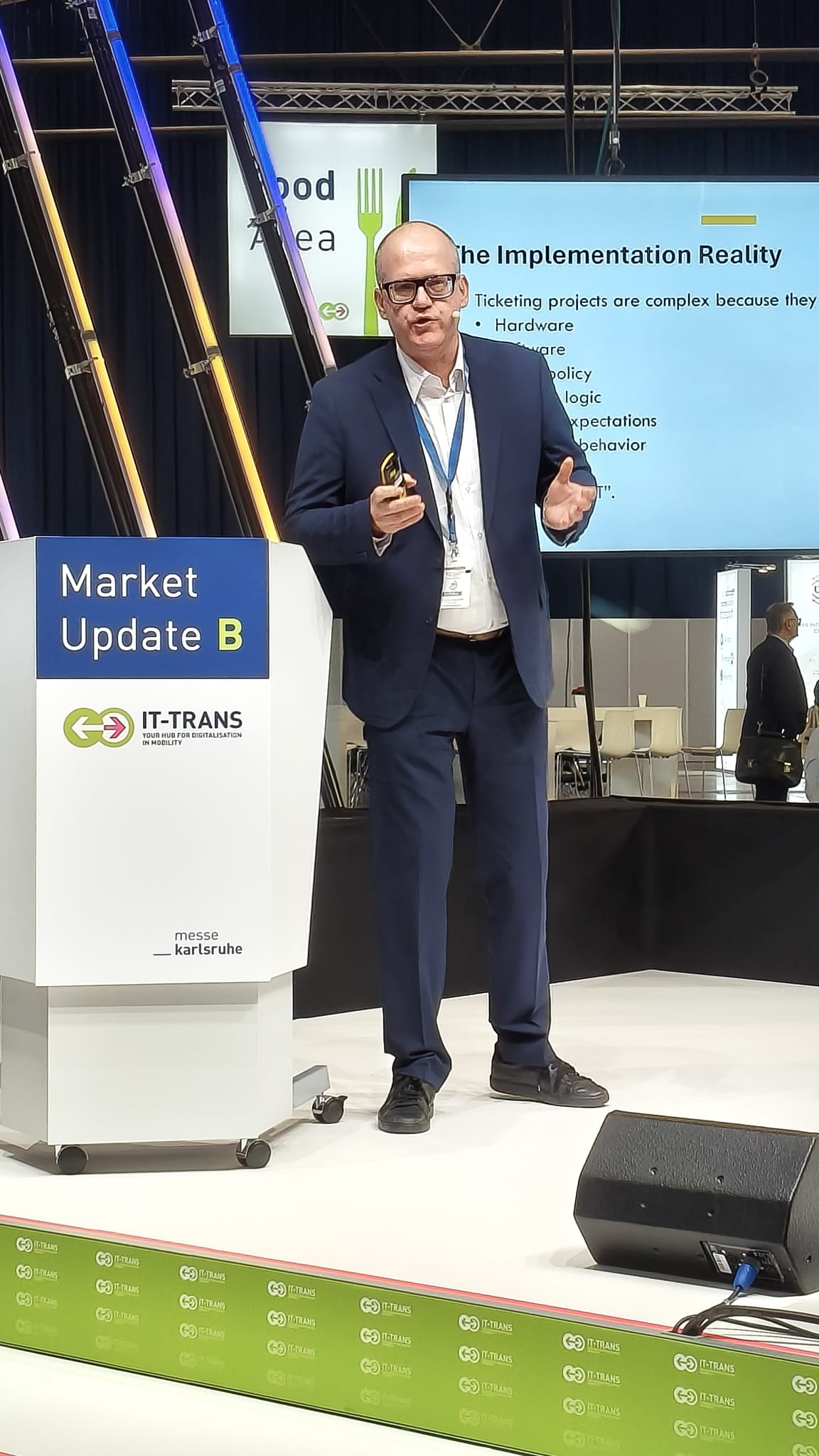
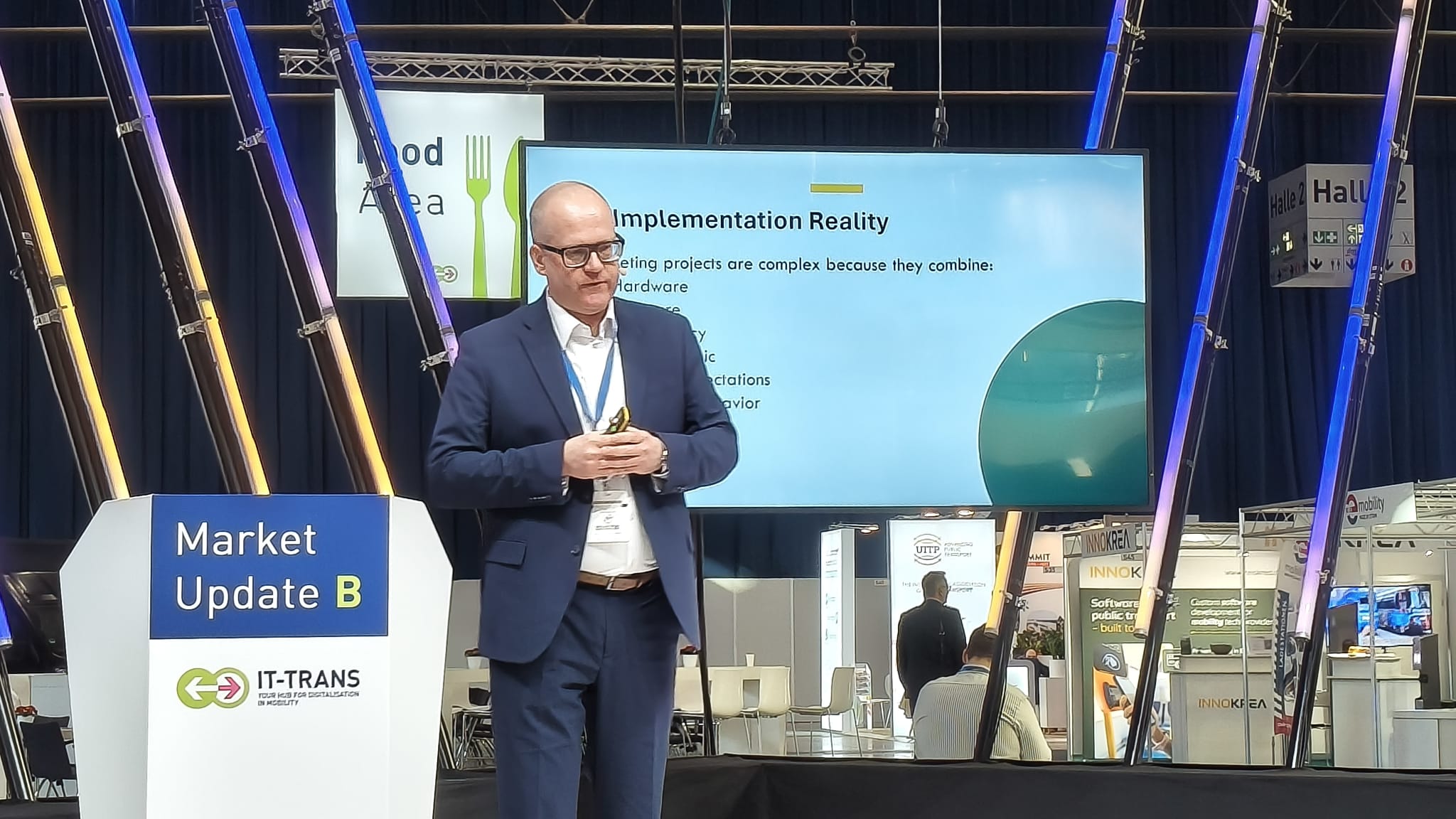
Ticketing systems sit at the intersection of several domains:
- transport infrastructure
- software platforms
- fare policy
- public regulation
- passenger behaviour
Because of this, ticketing is not just an IT system. It is an operational backbone of the transport ecosystem. When something fails, passengers immediately notice. From a passenger perspective, the system is experienced as a single service. They do not distinguish between vendors, hardware, software layers or organisational responsibilities. That makes architectural decisions particularly important.
The Standard vs Custom debate
In discussions about ticketing platforms, we often hear a debate between standard products and custom solutions. In reality, this is not an ideological question.
Standard platforms work very well in many situations. They provide stability, proven functionality, and faster deployment. However, problems tend to appear when several constraints accumulate at once.
From experience, standard platforms often struggle when environments include:
- complex legacy infrastructure
- highly specific local fare policies
- regulatory volatility
- increasing multimodal integrations
In such environments, flexibility becomes more than a convenience – it becomes a structural requirement. This is where hybrid architectures or custom components can become necessary.
Integrating modern systems with legacy infrastructure
One of the most common challenges in ticketing projects is the coexistence of modern digital services with long-established infrastructure. Validators, vending machines, and central databases often represent years of operational investment.
Replacing them completely is rarely feasible. Successful modernisation therefore usually means evolving systems rather than replacing them. In several deployments, introducing clearly defined integration layers proved critical. Instead of modifying legacy logic directly, new digital components interacted through controlled APIs.
This approach allowed us to isolate risk and introduce new services without destabilising existing infrastructure. An important lesson from such projects is that good architecture is often less about redesigning everything – and more about knowing where not to intervene.
Agile development in public transport environments
Another interesting aspect of ticketing implementations concerns development processes.Agile development is often associated with speed. But in public transport environments, agility usually means something different.
It means structured adaptation to change.Fare policies may evolve during implementation. Subsidy schemes may be introduced or modified. Environmental incentives may appear.
Projects therefore benefit from short feedback loops, transparent prioritisation and incremental deployment. Iteration in this context is not about experimentation. It is about maintaining predictability under changing conditions.
Fare logic is becoming the core system
Perhaps the most interesting transformation in ticketing systems concerns fare logic itself. Historically, ticketing systems revolved around sales channels and validation hardware. Fare rules were often relatively simple.
Today this is changing. Fare logic is becoming significantly more complex due to several factors. Dynamic pricing models introduce flexible pricing rules and daily caps. Multimodal travel requires integrated fare policies across operators and modes. And environmental or regulatory programs increasingly influence fare structures.
This means that fare engines are evolving from simple pricing tables into rule-based policy engines that reflect broader mobility strategies. Designing these systems with sufficient flexibility is becoming increasingly important.
Architecture is also risk management
Across different implementations, one insight appears consistently. Ticketing projects are not only technology projects. They are also risk management exercises.
Architectural decisions determine how easily systems can evolve, how failures can be isolated, and how organisations can adapt to policy changes. In complex public transport environments, innovation alone is rarely the main objective.
What organisations really need is control and predictability while systems evolve.
Final thought
Public transport ticketing will continue to evolve alongside mobility ecosystems. Multimodal integration, sustainability policies, and digital passenger services will continue to increase system complexity.
In such environments, successful ticketing systems are not necessarily the most innovative ones. They are the systems that provide flexibility, transparency and operational stability in a constantly changing environment.